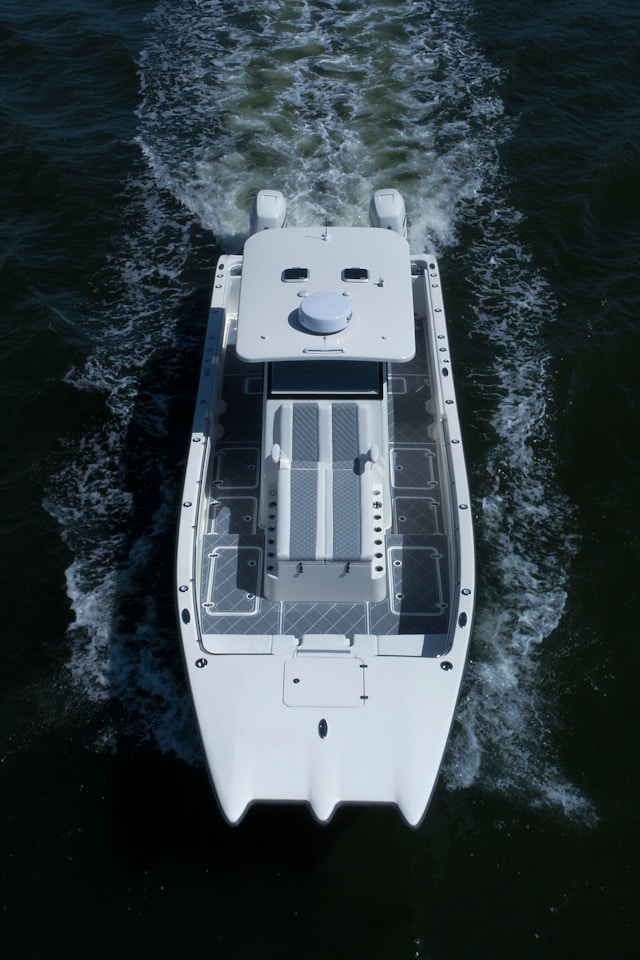
Our research innovatively explores the intersection of artificial intelligence (AI), emotion recognition, and maritime operations, focusing on enhancing safety and efficiency in the shipping industry through the quantification of human factors. By leveraging cutting-edge technologies such as facial micro-expression analysis and speech emotion recognition, our work aims to identify and mitigate the effects of stress, fatigue, and other emotional states on maritime personnel. This proactive approach seeks to improve decision-making processes, reduce potential errors, and ultimately safeguard both crew and cargo. Furthermore, your research extends to the application of these technologies in yacht interior design, proposing adaptive environments that respond to occupants’ emotional states to create more comfortable and conducive living spaces. This multidisciplinary research not only contributes to the field of maritime operations and design but also sets a new standard for the integration of AI in monitoring and improving human well-being in highly specialized environments.
Our Methodology
Our research delves into the intricate relationship between human emotions and maritime operations, pioneering a multimodal emotion recognition system that leverages the Facial Action Coding System (FACS) and the Geneva Minimalistic Acoustic Parameter Set (GeMAPS). This innovative approach aims to enhance maritime safety by accurately assessing the emotional states of personnel on board, thereby informing ergonomic ship design and operational protocols. Through the integration of advanced AI algorithms and a variety of biosensors, we are able to capture and analyze subtle facial expressions and speech patterns, offering a comprehensive understanding of an individual’s well-being. This not only aids in mitigating the adverse effects of stress and fatigue among maritime personnel but also paves the way for creating adaptive environments that respond dynamically to the crew’s emotional needs. By fostering a safer and more responsive maritime environment, we contribute to the overarching goal of improving operational efficiency and ensuring the well-being of seafarers.
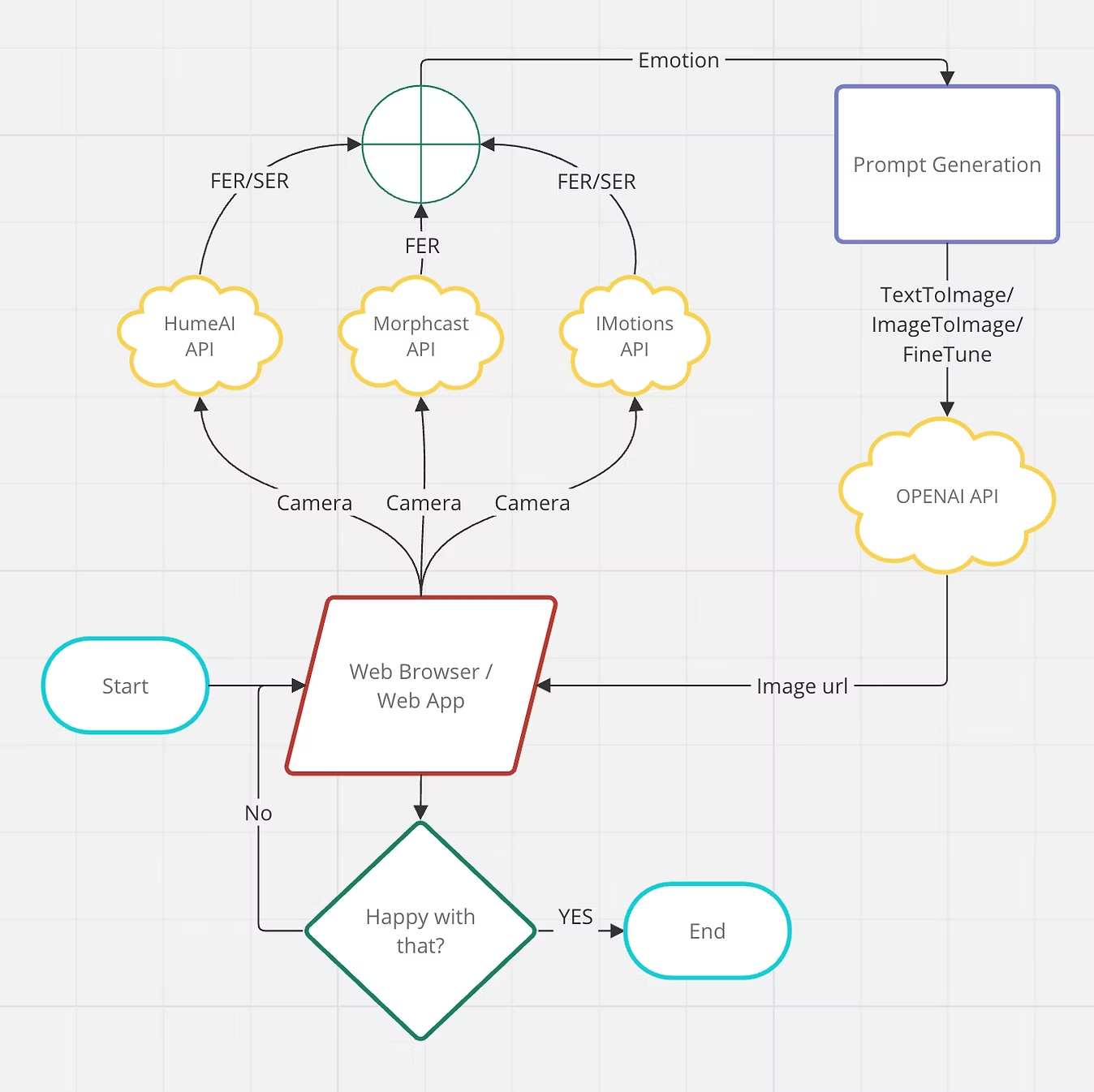
Our research ambitiously integrates the Facial Action Coding System (FACS) with the Geneva Minimalistic Acoustic Parameter Set (GeMAPS) to pioneer a comprehensive approach towards emotion recognition. FACS, a tool developed by Ekman and Friesen, meticulously analyzes facial expressions by encoding the movements of facial muscles, offering a granular insight into the myriad of human emotions. This system’s precision in recognizing emotions like happiness, sadness, anger, and others, based on facial muscle movements, is unparalleled.
Coupled with GeMAPS, which assesses vocal parameters for emotion detection, our methodology achieves a multimodal understanding of emotional states, enhancing the reliability and accuracy of our emotion recognition systems. This approach not only bolsters our capacity to gauge emotions in maritime settings effectively but also informs the design of adaptive environments responsive to the emotional cues of the occupants. The integration of FACS and GeMAPS marks a significant leap in our endeavor to harness emotion recognition technology for creating safer and more empathetic maritime environments.
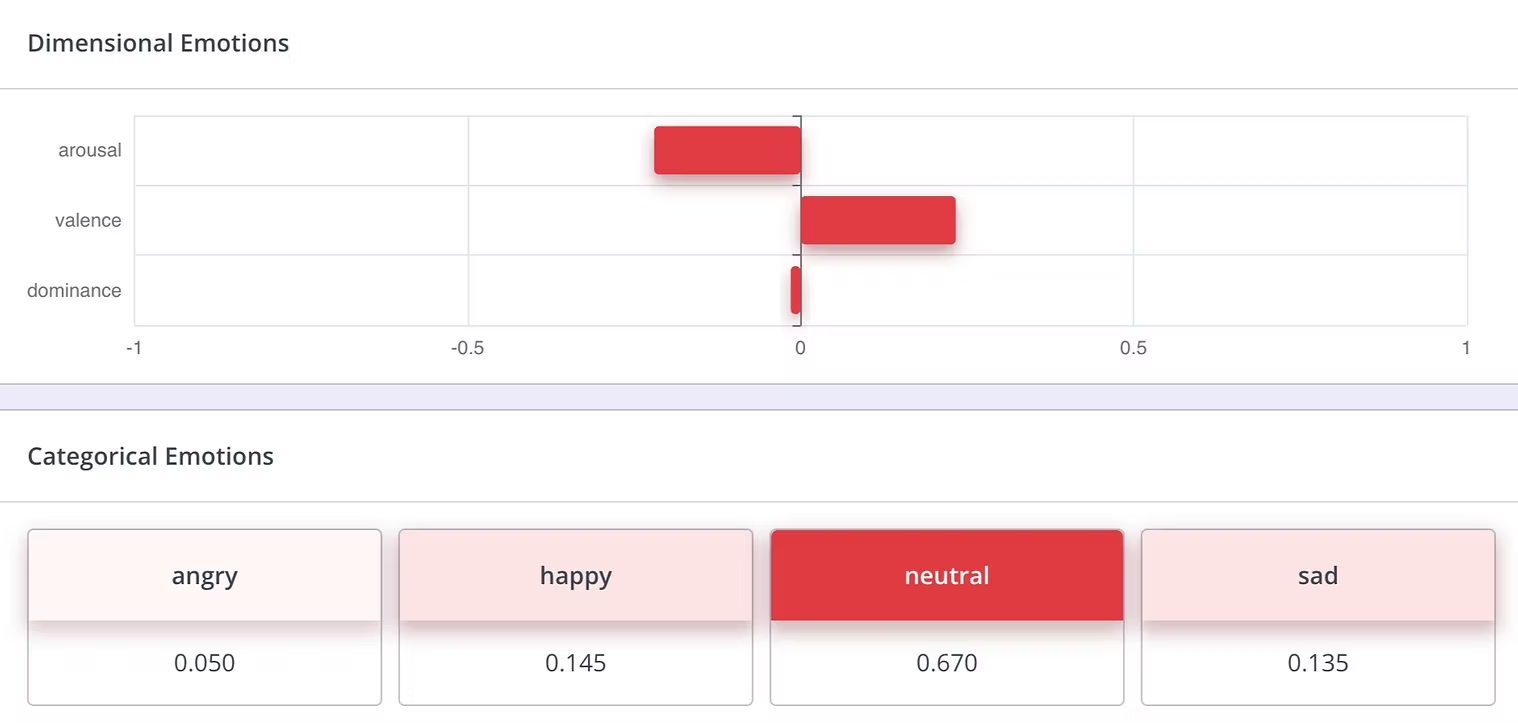
FER + SER in VALENCE AROUSAL DIAGRAM
The integration of Speech Emotion Recognition (SER) and Face Emotion Recognition technologies, complemented by the Valence-Arousal Diagram, offers a comprehensive approach to understanding and interpreting human emotions in real-time. SER analyzes the acoustic features of speech, such as pitch, loudness, and duration, to infer emotional states, providing insights into the speaker’s feelings and engagement levels. Similarly, Face Emotion Recognition leverages computer vision and artificial intelligence to detect subtle facial expressions and micro-expressions, identifying emotions such as happiness, sadness, anger, and surprise. The Valence-Arousal Diagram serves as a powerful tool to map these emotions onto a two-dimensional space, where valence represents the positivity or negativity of an emotion, and arousal indicates its intensity or activation level. Together, these technologies create a multidimensional understanding of human emotions, enabling applications in fields ranging from mental health assessment to enhancing customer service and improving educational experiences.
Leave a Reply